Guidance for safely monitoring and managing sugar glider nails.
Why Nail Trimming Matters
Sugar glider nails are designed for climbing, clinging, leaping, and gripping. When nails become too sharp or too long, they can scratch skin during handling and may also catch on fabric, pouches, toys, or cage items.
Keeping nails managed is helpful for the owner, but it is also a safety issue for the glider. A nail that catches can lead to panic, twisting, pulling, or injury.
Some gliders tolerate nail trimming well over time, while others may need two people until the owner becomes more comfortable with the process.
Diagram
Where to Trim
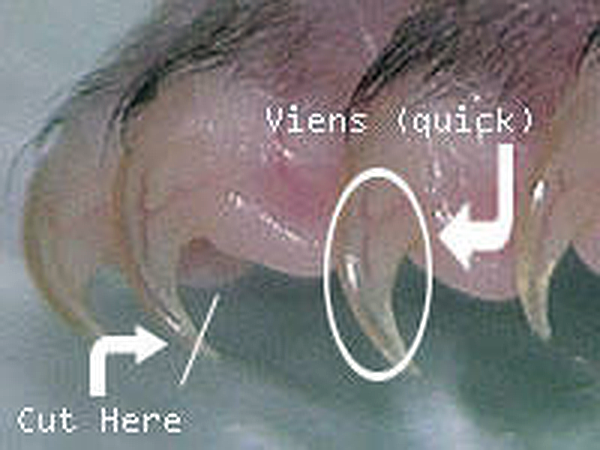
The diagram below shows the basic idea: trim only the very tip of the nail and avoid the quick. Cutting too far can cause bleeding.
Trim only the tiny tip of the nail. Avoid the quick.
Supplies
What You May Need
A small towel.
Nail clippers appropriate for small nails.
A second helping hand, especially while learning.
Cornstarch, a styptic product, or another vet-recommended option to help stop bleeding if a nail is cut too short.
Process
Basic Trimming Guidance
Many owners find trimming easier when gliders are tired, such as in the morning. Use a towel to gently hold the glider without squeezing too tightly. If needed, covering the glider’s head may help reduce stress.
Clip only the very end of each nail. Do not cut too much. If you cut into the quick, the nail can bleed.
If bleeding occurs, use cornstarch, a styptic product, or a vet-recommended blood-stopping product to help clot the blood. If bleeding does not stop, or if the glider seems injured, contact an exotic veterinarian.
Maintenance
Wheel-Based Nail Maintenance
Wheel-based products designed to help keep nails worn down can be helpful for some owners, but they still require supervision and regular checking.
Any nail-trimming insert or track should be used carefully. Watch for irritation, over-wearing, stress, or changes in how your glider uses the wheel. Nails that are too short can also cause problems.
Some owners use fine finishing sandpaper on part of a wheel surface as a temporary option. If an owner uses any abrasive method, it should be done cautiously, temporarily, and under supervision.
Do not leave abrasive material in the wheel continuously. Check feet and nails frequently, and stop using it if there is irritation, over-trimming, limping, redness, or stress.
Vet Help
When to Ask for Help
Ask an experienced sugar glider owner or a qualified exotic veterinarian to demonstrate nail trimming if you are unsure. It is better to get help than to accidentally cut too far or stress the glider unnecessarily.
Contact a vet if a nail is torn, bleeding continues, a toe or foot looks swollen, the glider is limping, or the glider seems painful or unusually quiet.