Mealworms, feeder insect nutrition, and a two-container mealworm farm guide for sugar glider owners.
Mealworms as a Protein Treat
Mealworms are a common protein treat for sugar gliders, and many sugar gliders love them. The important caution from the older guide still matters: feeder insects are high in phosphorus, so calcium balance matters within the overall diet.
Mealworms should fit into a complete diet plan, not replace the staple diet. Use captive-raised feeder insects from a reliable source rather than insects collected outdoors.
Feeder Insect Nutrition Comparison
Analysis
Crickets
Mealworms
Wax Worms
Super Worms
Moisture
69%
62%
62%
59%
Fat
6%
13%
22%
18%
Protein
21%
21%
16%
17%
Fiber
3%
2%
8%
7%
Calcium/Phosphorus Ratio
0.081%
0.040%
0.131%
0.053%
Image
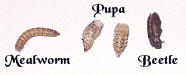
Mealworm, Pupa, and Beetle
The older page included this small image to show the basic mealworm life cycle. It is intentionally displayed close to its original size so it does not look stretched or pixelated.
Mealworm, pupa, and beetle.
How to Start and Keep a Mealworm Farm: Two-Container System
Start with captive-raised mealworms from a bait shop, pet store, or reliable online feeder source. Do not collect insects outdoors because of pesticide, fertilizer, parasite, and contaminant risk.
Choose two properly ventilated containers. Some owners use a 10-gallon aquarium, critter keeper, or other ventilated container. Mealworms require airflow and stable temperatures as they move through their stages of development.
Bedding can be made from rolled oats, bran, dry baby cereal, corn flakes, corn meal, wheat germ, or a combination of similar dry foods. The older guide recommended about 2½ to 3 inches of bedding/food in each container.
Add moisture foods such as raw potato, apple slices, carrots, or banana peel. Some keepers add strips of cloth or paper to help prevent compacting, since mealworms need air.
Add mealworms to the first container. After several weeks, some will turn into pupae and eventually beetles. Move beetles into the second container with the same bedding so they can lay eggs. Once the eggs hatch and mealworms are a usable size, move them as needed.
For upkeep, add fresh moisture food, replace foul bedding, remove dead mealworms, pupae, and beetles, and keep the colony at a stable temperature.