Breeding Information

Sugar Glider Colors and Genetics

Color descriptions, photos, and basic genetic notes for common sugar glider colors and variations.

Color Descriptions vs. Genetics

Visible color descriptions help identify how a sugar glider looks. Genetics explains how a trait may be inherited. These two ideas are related, but they are not the same.

A sugar glider may visually appear to be one color or variation while also carrying genes for another color that cannot be seen. This is especially important for recessive colors. A sugar glider must inherit two copies of a recessive gene to visually express that color, while a glider with only one copy may be a het and look like another color.

Color identification can also be affected by age, lighting, staining, diet, and individual variation. Genetics should always be confirmed through lineage when breeding decisions are involved.
Classic Gray Sugar Gliders

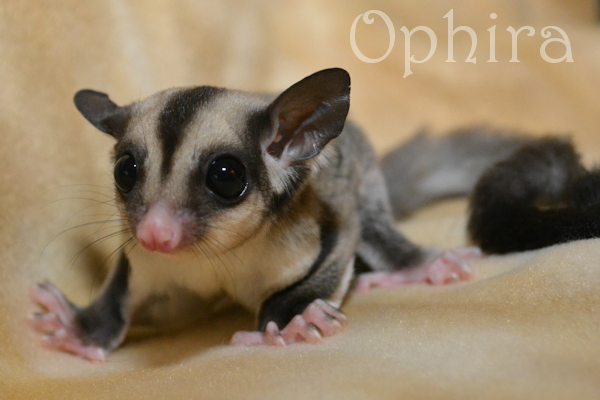
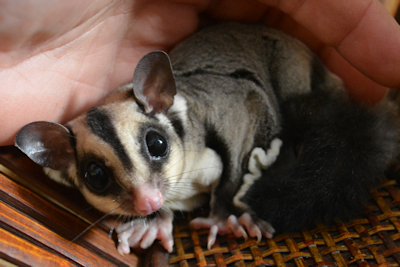
Classic gray, sometimes called standard gray, is the common wild-type appearance seen in many captive sugar gliders. These gliders usually have a gray body, darker dorsal stripe, dark markings around the ears and eyes, and a lighter belly.

Classic gray is often used as the comparison point when describing other colors and markings.

Genetic note

Classic gray is a visual description and comparison point rather than a special color mutation.

Classic gray sugar glider named Ophira
Classic gray sugar glider example.
Classic gray sugar glider being held in hands
Classic gray sugar glider showing typical standard gray markings.
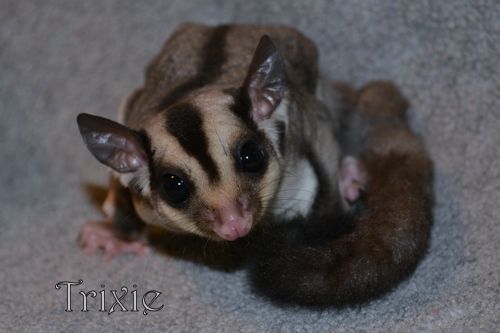
Classic gray sugar glider named Trixie
Classic gray sugar glider with a dark dorsal stripe and lighter belly.
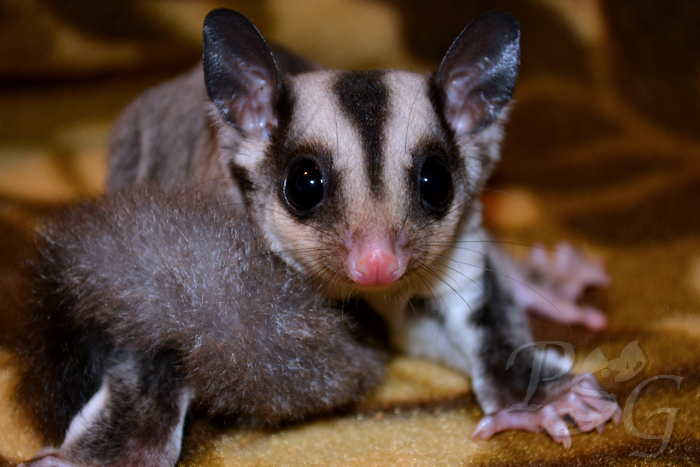
Classic gray sugar glider on a blanket
Another classic gray example used for visual comparison.

Back to top ↑

White Face Sugar Gliders

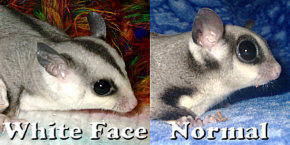
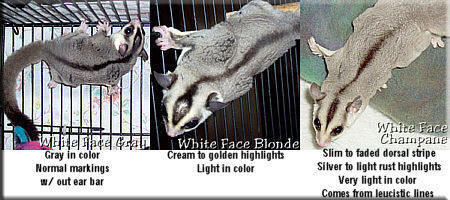
White face is a variation involving the missing bar under the ear, creating the appearance of a white face. The eye rings may appear lighter or broken, and joeys may not show all markings immediately.

White face is a visible variation and should not be treated the same way as a simple recessive color.

Genetic note

White face is a visible variation. Breeding outcomes should be considered through lineage and breeder experience rather than treated like a simple recessive color.

White face sugar glider compared with normal markings
White face compared with normal markings.
White face sugar glider color examples
White face sugar glider examples.

Back to top ↑

White Tip Sugar Gliders

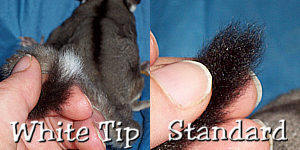
A white tip sugar glider has a white tip at the end of the tail. The amount of white may range from a few hairs to a larger section of the tail.

White tip is not a simple single recessive trait.

Genetic note

White tip should be described as a visible tail variation rather than a recessive color category.

White tip sugar glider tail example
White tip compared with standard tail markings.

Back to top ↑

Albino Sugar Gliders

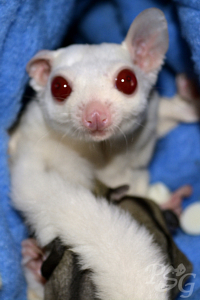
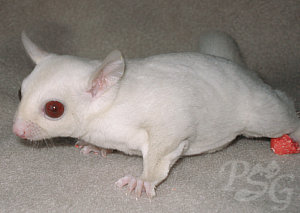
Albino sugar gliders are all white with red eyes.

Genetic note

  • Type: Recessive.
  • Identifiers: All white coat with red eyes.
  • Notes: Some albinos, sometimes described as T-, may have faint yellow markings where a wild-type sugar glider would have black or brown markings.
Albino sugar glider
Albino sugar glider.
Albino sugar glider showing red eyes and white coat
Albino sugar glider showing red eyes and white coat.

Back to top ↑

Creamino Sugar Gliders

Creamino sugar gliders have a cream-colored body with tawny, tan, or apricot markings where a classic gray glider would have darker markings. They usually have garnet-colored eyes.

Genetic note

  • Type: Recessive.
  • Identifiers: Cream-colored body with tawny, tan, or apricot markings and garnet eyes.
  • Notes: Sometimes referred to as a T+ albino.
Creamino sugar glider
Creamino sugar glider.
Creamino sugar glider showing cream coat and warm markings
Creamino sugar glider showing cream coat and warm markings.

Back to top ↑

Leucistic Sugar Gliders

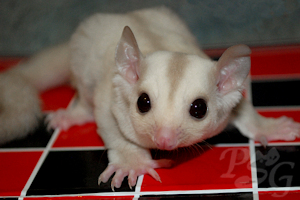
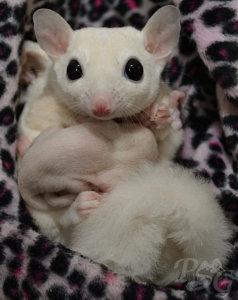
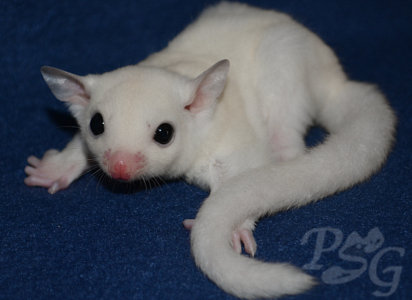
A leucistic sugar glider, also called a black-eyed white, is white with black eyes and little to no markings. Some may have faint yellowish markings or slight gray on the ears.

Genetic note

  • Type: Recessive.
  • Identifiers: All white coat with black eyes. Ears may have hints of gray.
  • Notes: Leucistic genes can work with platinum genes to produce platinum offspring.

Use the Platinum / Leucistic Calculator →

Leucistic sugar glider
Leucistic sugar glider.
Leucistic sugar glider with black eyes
Leucistic sugar glider with black eyes.
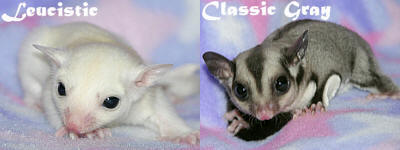
Leucistic sugar glider compared with classic gray
Leucistic compared with classic gray.

Back to top ↑

Platinum Sugar Gliders

Platinum sugar gliders usually have a white or light gray body with light to medium gray markings where a classic gray glider would have darker black or brown markings. They have black eyes.

Genetic note

  • Type: Recessive.
  • Identifiers: White or light gray body with light to medium gray markings and black eyes.
  • Notes: Some platinums come out of pouch white with faint gray markings on the tail and ears. They can develop color as they mature.
  • Additional note: It is possible for platinums to have broken dorsal stripes and not be mosaic. Platinum genes can work with leucistic genes to produce platinum offspring.

Use the Platinum / Leucistic Calculator →

Platinum sugar glider
Platinum sugar glider.
Platinum sugar glider showing light gray markings
Platinum sugar glider showing light gray markings.

Back to top ↑

Red Series Sugar Gliders

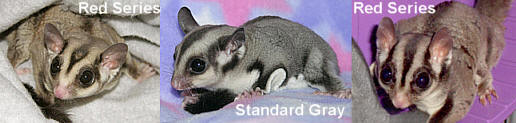
The red series includes descriptions such as chocolate/brown, buttercream, lion, and red cinnamon. Identification can be debated because diet, staining, age, and genetics can affect coat appearance.

Genetic note

Red series descriptions are often visual descriptions and may not always indicate a simple genetic category.

Red series sugar glider compared with standard gray
Red series compared with standard gray.

Back to top ↑

Mosaic and Ring Tail Sugar Gliders

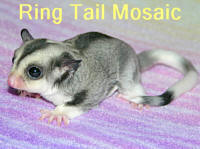
A mosaic is classified by random white patches on the body, feet, and/or tail. Ring tail mosaic refers to mosaic rings on the tail, though not all mosaics are ring tailed.

Genetic note

Mosaic is a pattern or variation category and should be described separately from recessive colors such as albino, creamino, leucistic, and platinum.

Ring tail mosaic sugar glider example
Ring tail mosaic example.

Back to top ↑

Caramel Sugar Gliders

Caramel sugar gliders are commonly described in the breeder community as a distinct Indonesian line or subspecies-type population rather than simply a coat color. They are often described as larger, caramel-toned, and docile.

Because breeder experience has reported sterile males from Caramel-to-standard pairings, Caramels should generally be bred only to other Caramels.

Read the full Caramel Sugar Gliders page →

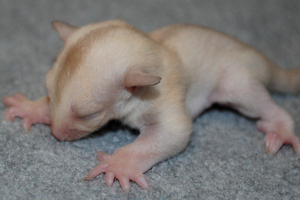
Caramel sugar glider joey
Caramel sugar glider joey.

Back to top ↑